We went to buy some new mattresses recently at our local bedding shop. They are cosy memory-foam, so deep and luxurious it meant moving the large pictures on the wall over the bed as now our heads would bump into them. At the shop was a new range of bedroom furniture and it was exquisite; reproductions of Georgian style antiques, all in walnut and very expensive. I yearned.
When we got home I paced the bedroom and eyed the ill-assorted types of wood and style of furniture there and thought how lovely it would be to have all the furniture matching, in the same light walnut, the same style for chests of drawers, bedside cabinets and dressing table plus a charming, tall, slender piece of furniture in that range solely for the purpose of guarding ones undies. I might even treat myself to silk undies to go in such a delightful piece with its little secret drawers (sorry for the pun!). Then I'd have to get new curtains as well as such elegant furniture would require something far more elegant than the ones I'd hastily run up when we first moved here. The list was growing at an alarming pace of effort and expenditure. However, I wasn't rushing into any sort of decision - but woke every morning and contemplated happily just how splendid the room would look.
Then it gradually dawned on me that I couldn't part with what I already had. These old, battered pieces of furniture had a memory, a meaning, a moment in my life embedded in them. The Victorian chest of drawers, the drawers of which always stick and are annoyingly difficult, the washstand with it's quaint green tiled back on which a repeat motif of mauve pansies flourish, were bought in the 1970's when I won a prize of £20 for a play I had written. The simple, useful bedside tables were amongst my mothers first household items, bought in the late 1940's. She gave me these when we married and we cut off the cabriolet feet in an effort to 'modernise' them at the time. They are now so layered with coats of paint through the years to match every bedroom decor we have ever had that the doors scarcely shut any more. The nursing chairs I bought at my first ever auction and I love them. The Victorian dressing table was purchased when I first moved to Malvern. I felt so happy with it because it's quaint and has useful drawers beneath it. The old oak chest belonged to my late mother-in-law. I can still picture it standing in her hallway during all the years I knew and loved her. How could I now get rid of all these much-loved items with their history and their personal meaning, give them to strangers?
It made me understand that a home is an organic place that should grow with one over the years. It should contain the ancestors in it, contain one's past, present and future too, be a living entity, a part of oneself, the outer shell in which one exists and lives. This struck me with real force and feeling. I knew that everything was perfect just as it was.
So I saved our money and now take a renewed pleasure every time I awake to these items which have remind me of so many loved people and moments in my life.

A blog for lovers of art, music, books and all things creative and beautiful. By an author who aspires to penetrate the dark, dense forest of the published world.
Sunday, October 23, 2011


Thursday, July 14, 2011
Life's Crazy Mistakes
Time to stop being profound, methinks. It's too wearing for the brain these days. So instead I'll reflect a little on the fact that one makes some profoundly foolish mistakes in the course of life. I often yearn to look back on a mistake free life but it isn't possible. And what's more it would mean that I'd be so smug as to be unbearable. Mistakes are humbling and humbling is good for the ego.
![]() The latest mistake got us literally into deep waters. My husband and myself were holidaying for a few days near Newquay in West Wales. We'd been there before and I recalled that one could take a boat road round Cardigan Bay for an hour with the hope of seeing seals and dolphins. This desire stuck with me and I asked John to reconnoitre while he was down by the bay. He picked up an odd leaflet while there. Later we went to the bay and, on asking directions, were told to get tickets from the Marine Centre. This we did and then sat in the sun till it was time to go. We saw a nice little boat arrive and went to clamber on board only to be told that we had booked with a different lot and our 'trip' was to be in an inflatable dinghy!
The latest mistake got us literally into deep waters. My husband and myself were holidaying for a few days near Newquay in West Wales. We'd been there before and I recalled that one could take a boat road round Cardigan Bay for an hour with the hope of seeing seals and dolphins. This desire stuck with me and I asked John to reconnoitre while he was down by the bay. He picked up an odd leaflet while there. Later we went to the bay and, on asking directions, were told to get tickets from the Marine Centre. This we did and then sat in the sun till it was time to go. We saw a nice little boat arrive and went to clamber on board only to be told that we had booked with a different lot and our 'trip' was to be in an inflatable dinghy!
![]() I was absolutely horrified at this idea as I am not a lover of the sea. Ponds, rivers, lakes, I love - but the sea is absolutely terrifying and one reason why I am not a fan of cruises. All that water everywhere. No thanks. My strong instinct was to pay up and join the nice, neat boat and forgo the other tickets but my husband was having a mean turn about losing the money already paid (and more expensive!) for the dinghy ride. Right at the last minute, I had a strong urge to let him get on with it if he felt that adventurous. I would abandon him and join the boat. But I felt that wouldn't be fair, so I desisted and watched it sail away with a sinking feeling in my gut. So that was mistake number one. Being nice to others.
I was absolutely horrified at this idea as I am not a lover of the sea. Ponds, rivers, lakes, I love - but the sea is absolutely terrifying and one reason why I am not a fan of cruises. All that water everywhere. No thanks. My strong instinct was to pay up and join the nice, neat boat and forgo the other tickets but my husband was having a mean turn about losing the money already paid (and more expensive!) for the dinghy ride. Right at the last minute, I had a strong urge to let him get on with it if he felt that adventurous. I would abandon him and join the boat. But I felt that wouldn't be fair, so I desisted and watched it sail away with a sinking feeling in my gut. So that was mistake number one. Being nice to others.
![]()
![]() Really, you'd think by now I'd learnt to follow my instincts. But no.
Really, you'd think by now I'd learnt to follow my instincts. But no.
And we never even got to see a dolphin.


My next mistake, and a totally daft move, was to go and sit in the bow. We had to wear a lifebelt which says a lot. Off we went into the sea and though the vessel was going slowly it still pitched and rolled and the sea was FAR too close. However, by looking at the land instead of watching the rolling waves, I was okay and John was whooping happily, enjoying the thrill of it all. A child on board started wailing in terror and my heart was with the poor kid. Anyway, I settled into relaxing with the pitch and roll and watched the birds that were seen wheeling and screaming to one another on the amazingly striated cliffs but there wasn't a dolphin in sight.

If I thought all this was bad enough but bearable, it was when the boat turned back and we were now going against the swell that I really freaked out. Huge waves rolled up before us, the boat curved to meet them and amazingly didn't capsize. This was to be half an hour of hell returning to the jetty. I simply shut my eyes and clung to the boat and to John (his arm has bruises to show for it!) while we surged up and down. I prayed to be forgiven all the sins of my life just in case this was it. But I had a rude awakening back into this world of a sudden when an extra huge swell poured over us soaking us to the skin. Now we had to sit and freeze till we at last got out on the jetty and sloshed our way to the car where I stripped some of the clothes off and wrapped myself in a long, dry jumper. Poor John had to drive back to our lodgings in wet trousers.

And we never even got to see a dolphin.
Tuesday, June 21, 2011
Entering the Abyss
Love is a funny business . . . falling in love an odd expression. What do we actually fall into?
The ancients often painted and carved a sweet, chubby, innocent little Cupid, a child - yet with those lethal bows and arrows - blindfolded as if to say, 'Love is blind' - as well as a madness, an altered state into which we 'fall'. All this seems to indicate that when we fall in love with something or someone we are no longer truly conscious anymore. And yet, at the same time we can feel more alive, more real and the world glows with joy. But if this love is not returned or those involved awaken from their dream illusion, we enter a twilight realm where we stumble about, bereft of our reasoning powers, searching, yearning for something intangible, often with no idea quite what it is we think we have found in 'the other'. A part of ourselves, our unexpressed Shadow side, an animus, anima figure? We try to reason it out thus in modern psychological terms but it doesn't help much at the time. No amount of reasoning can explain our reactions to what is stirred up within us by someone who is often a total stranger. In fact a stranger is a better a hook for our instinctual and archetypal longings. The deeper, more passionate, more compulsive the feeling of love, the darker it all becomes; if we are rebuffed or cast aside, all those caring, tender feelings and that all-embracing acceptance of another gives rise to the noxious fumes of hate, jealousy and revenge. Stalkers are a horrible example but we all feel those compulsive feelings at some time. Let's be honest!

Aphrodite, the great Goddess of Greek myth had a strange beginning according to one myth. When Ouranos the Sky God was castrated by his own son, the god Kronos (Saturn), his genitals fell into the sea and produced a mighty frothing and from the unity of sperm and sea arose the glorious form of Aphrodite (her name is translated as 'foam-born)' This falling into the sea or the unconscious seems to have been the first falling in love.
Plato in his Symposium speaks of Aphrodite or Venus as having a 'superior' and 'inferior' form, or Sacred and Profane love. He also states that Eros, her son, has this dark and light side too. He describes the two myths about their parentage. The Heavenly Aphrodite is the daughter of Ouranos and has no mother, like Athena, the daughter of Zeus, This form of Aphrodite seems linked with the Libran Venus, rational, just, calm, intellectual, beauty loving but in some ways remote. The “common” Aphrodite is the daughter of Zeus and Dione and comes from a “normal” mating of male and female energies. This equates with Taurean Venus for Taurus enjoys the simple pleasures of mating and sensual joys, loves Beauty in tangible forms such as sculpture, music, painting. Yet has a darker side which feels the depths of rage, jealousy and possessiveness when thwarted. Eros too has the most ancient heavenly parentage born from the World Egg of Nix (Night, nothingness) and the Wind but in later myth we see his more ordinary manifestation as a son of Aphrodite and Hermes (or Zeus or Ares!)
Sacred and Profane Love. Why should one type of love be inferior to the other, we now ask? Isn’t it this sort of talk that created the division, later to be taken up by the Mediaeval Church, a split in consciousness into Beauty and the Beast, God and the Devil, the problem that Mankind has always battled with? Shouldn't we try to marry the two, balance the opposites within us?
We have to recall that Eros was a great God, only later denigrated to a rather sulky little boy playing about his powerful and often cruel and vengeful mother, Aphrodite; the ideal of Love in all its sheer grandeur and awfulness reduced in power to mere Hollywood sentimentality. Heroic effort is needed to grow up and learn to understand just what Love is really all about. It isn’t about 'happy ever after' or romantic idylls or constant sweetness and light. To expect that a relationship will last forever with no ups and downs is a modern dangerous fantasy and foolishness. It means that young people today prefer to remain single, lonely at heart and isolated rather than risk the dark abyss. It means couples who fly apart at the least hint of unpleasantness, betrayal or trouble. No more the ability to forgive, to understand anothers transgressions as reflecting our own - but the childlike and selfish insistence on 'my happiness, my pleasure'
 Apuleius says of Eros in his version of “Cupid and Psyche, ' that he is no sweet little cherub but an evil Daimon, rash enough and hardy, who by his evil manners contemning all public justice and law, armed with fire and arrows, running up and down in the nights from house to house and corrupting the lawful marriages of every person, doth nothing but that which is evil'. Love was well conceived then as a power beyond mortal man, dangerous, painful, destructive, even evil at times but at its best, stirring men and women from the comfort of their “mother-father “marriages and unions and through this adulterous havoc helping them to mature in feeling.
quote from “Cupid and Psyche” by Apuleius trans. from Latin by William Adlington Routledge and Sons. 1906
The ancients often painted and carved a sweet, chubby, innocent little Cupid, a child - yet with those lethal bows and arrows - blindfolded as if to say, 'Love is blind' - as well as a madness, an altered state into which we 'fall'. All this seems to indicate that when we fall in love with something or someone we are no longer truly conscious anymore. And yet, at the same time we can feel more alive, more real and the world glows with joy. But if this love is not returned or those involved awaken from their dream illusion, we enter a twilight realm where we stumble about, bereft of our reasoning powers, searching, yearning for something intangible, often with no idea quite what it is we think we have found in 'the other'. A part of ourselves, our unexpressed Shadow side, an animus, anima figure? We try to reason it out thus in modern psychological terms but it doesn't help much at the time. No amount of reasoning can explain our reactions to what is stirred up within us by someone who is often a total stranger. In fact a stranger is a better a hook for our instinctual and archetypal longings. The deeper, more passionate, more compulsive the feeling of love, the darker it all becomes; if we are rebuffed or cast aside, all those caring, tender feelings and that all-embracing acceptance of another gives rise to the noxious fumes of hate, jealousy and revenge. Stalkers are a horrible example but we all feel those compulsive feelings at some time. Let's be honest!
Aphrodite, the great Goddess of Greek myth had a strange beginning according to one myth. When Ouranos the Sky God was castrated by his own son, the god Kronos (Saturn), his genitals fell into the sea and produced a mighty frothing and from the unity of sperm and sea arose the glorious form of Aphrodite (her name is translated as 'foam-born)' This falling into the sea or the unconscious seems to have been the first falling in love.
Plato in his Symposium speaks of Aphrodite or Venus as having a 'superior' and 'inferior' form, or Sacred and Profane love. He also states that Eros, her son, has this dark and light side too. He describes the two myths about their parentage. The Heavenly Aphrodite is the daughter of Ouranos and has no mother, like Athena, the daughter of Zeus, This form of Aphrodite seems linked with the Libran Venus, rational, just, calm, intellectual, beauty loving but in some ways remote. The “common” Aphrodite is the daughter of Zeus and Dione and comes from a “normal” mating of male and female energies. This equates with Taurean Venus for Taurus enjoys the simple pleasures of mating and sensual joys, loves Beauty in tangible forms such as sculpture, music, painting. Yet has a darker side which feels the depths of rage, jealousy and possessiveness when thwarted. Eros too has the most ancient heavenly parentage born from the World Egg of Nix (Night, nothingness) and the Wind but in later myth we see his more ordinary manifestation as a son of Aphrodite and Hermes (or Zeus or Ares!)
Sacred and Profane Love. Why should one type of love be inferior to the other, we now ask? Isn’t it this sort of talk that created the division, later to be taken up by the Mediaeval Church, a split in consciousness into Beauty and the Beast, God and the Devil, the problem that Mankind has always battled with? Shouldn't we try to marry the two, balance the opposites within us?
We have to recall that Eros was a great God, only later denigrated to a rather sulky little boy playing about his powerful and often cruel and vengeful mother, Aphrodite; the ideal of Love in all its sheer grandeur and awfulness reduced in power to mere Hollywood sentimentality. Heroic effort is needed to grow up and learn to understand just what Love is really all about. It isn’t about 'happy ever after' or romantic idylls or constant sweetness and light. To expect that a relationship will last forever with no ups and downs is a modern dangerous fantasy and foolishness. It means that young people today prefer to remain single, lonely at heart and isolated rather than risk the dark abyss. It means couples who fly apart at the least hint of unpleasantness, betrayal or trouble. No more the ability to forgive, to understand anothers transgressions as reflecting our own - but the childlike and selfish insistence on 'my happiness, my pleasure'
Apuleius says of Eros in his version of “Cupid and Psyche, ' that he is no sweet little cherub but an evil Daimon, rash enough and hardy, who by his evil manners contemning all public justice and law, armed with fire and arrows, running up and down in the nights from house to house and corrupting the lawful marriages of every person, doth nothing but that which is evil'. Love was well conceived then as a power beyond mortal man, dangerous, painful, destructive, even evil at times but at its best, stirring men and women from the comfort of their “mother-father “marriages and unions and through this adulterous havoc helping them to mature in feeling.
It seems that in order to really experience Love, we have to fall into the heart's abyss even if it means betrayal, pain and suffering and try to climb out again as best we can when we awake from our sweet delusions. But having climbed out of the place where a passionate encounter can and still does take us, we can return clutching a piece of treasure. That treasure is a new awareness of ourselves and a new understanding of our own feelings. The pain of love can have a melting, softening effect upon the hardness of our hearts though sadly, it too often, simply hardens the heart, making us cynical and unfeeling out of fear of further pain.
quote from “Cupid and Psyche” by Apuleius trans. from Latin by William Adlington Routledge and Sons. 1906
Monday, May 30, 2011
Still determined, but maybe not so daft after all.
Mrs Bertha Blackbird (as we have christened her) managed to lay her eggs. We couldn't see them as she's on quite a high ledge but my daughter climbed a ladder and putting her hand in the nest while Bertha was out foraging, felt the three eggs there. We were quite thrilled about it. I was still nervous, mind you, that they'd never all fit in this nest. However, time proved me wrong and soon we could see the little necks straining up, beaks wide open, piping to Mrs B to come and give them their grubs. She worked tirelessly and didn't seem to mind our coming and going, just flew over out heads. She chose this place so she had to get used to it.
 You can just see the beady eye of one of the larger babes in this picture. One morning, I forgot to shut the kitchen door when I went into the garden. On my return there was Bertha standing in the kitchen, mouth full of worms, looking very disorientated. I had to chase her out. After a while as I went to get something in a corner of the kitchen and up flew a baby bird! It gave me quite a shock. I realised then why Bertha had come indoors like that. The babe had left the nest, flown in through the open door and its piteous yells brought her in search of her offspring.
After some chasing around the kitchen, I managed to catch the wee thing and stroked its little head to calm it down. Then left it under a bush nearby for its mother to find and feed. The next day, I had a feeling the rest of the brood had gone also and they had. So all was well and Bertha's determination paid off. Later I saw one of the youngsters, now quite large and doing it's own foraging. If only our own kids grew as fast and were independent so soon!
I tidied up her nest for her, clipping away some of the tumbling leaves and bits of straw. My husband was all for taking it away but I knew she would return. Sure enough she's there again today, sitting on a much tidier nest!... and ready to produce the next brood. It's wonderful to be so close and able to watch the process happening. I've never had that marvellous experience before.

After some chasing around the kitchen, I managed to catch the wee thing and stroked its little head to calm it down. Then left it under a bush nearby for its mother to find and feed. The next day, I had a feeling the rest of the brood had gone also and they had. So all was well and Bertha's determination paid off. Later I saw one of the youngsters, now quite large and doing it's own foraging. If only our own kids grew as fast and were independent so soon!
I tidied up her nest for her, clipping away some of the tumbling leaves and bits of straw. My husband was all for taking it away but I knew she would return. Sure enough she's there again today, sitting on a much tidier nest!... and ready to produce the next brood. It's wonderful to be so close and able to watch the process happening. I've never had that marvellous experience before.
Saturday, May 07, 2011
A Suspicious Man
 A kindly friend bought me a copy of 'The Suspicions of Mr Whicher', a true-life Victorian crime story about the murder of a little boy in a respectable Victorian middle-class home in 1860. When a child is killed so brutally . . . and this was a truly brutal murder. . . we all feel horror and disgust. It reminded me of the feelings and hysteria aroused over the murder of little James Bulger in 1993 which still raises its head in some manner even now because the killers were so young. In much the same manner, the death of little Saville Kent at Road Hill House in Wiltshire, horrifies us once more in this lucid, beautifully written and detailed account. There is no doubt that Kate Summerscale has impeccably researched this documentary work and written it with all the flair of a fascinating crime novel.
 The newspapers of the day seized the story, embroidered it, made it even more sensational to the point where questions were being asked in the House of Commons about why it was taking so long to solve the case. They fed with lurid details a sensation seeking public who gobbled up all the sensation and gore. The prim, sober Victorians seemed especially ready to be titillated in this manner, a media process that has carried on ever since. We cannot pretend we aren't equally fascinated by darkness and horror in our own times, though it appears now in the form of televsion documentaries, crime series or books and plays. A remove from the reality of a situation, dipping into hell from a safe distance. We don't watch public executions any more thank goodness. My mother was taken to one in Istanbul as a child of four and it upset her so much that she became paralysed on that same day for a year. She had a morbid fear of hanging and death for the rest of her life.
It is, however, from this late Victorian period in history that the detective novel, with writers such as Dickens and Wilkie Collins, began to emerge as well as those horror stories of the Edgar Allen Poe variety and Bram Stoker's delicious sexual vampires and transylvanian castles full of dark mysteries. The story of the murder at Road Hill House provided the basis for many of the famous crime and mystery novels produced from then on. After all, it was great stuff; families full of hidden rage, jealousy, sexuality and evil feelings, all lurking beneath respectable, calm exteriors and nicely conformist public behaviour.
Jack Whicher was a highly celebrated detective sent from the newly formed detective force with the Metropolitan Police in London. Up to this point his successes had been achieved through instinct, intuition and a very keen memory for detail. He was a working class man, he understood the ways of all the hustlers and thieves and could pick a man out as if through a kind of strange affinity. Policeman, criminal . . . these two are one another's opposites, what Jung would call each other's shadow side. This is how they recognise each other. They are one another at some archetypal level. Whicher was absolutely sure who it was that had murdered Saville Kent, knew full well it was an inmate of the house and a young family member. Due to all the hoo-ha in the press and in Parliament, he was forced to try and solve the crime quickly as if evidence and answers could be found growing on bushes. Evidence was not produced and the local police Inspector, who sympathised with the family, did much to obstruct him. Plus, because of his lower class origins and the fact that his accusations were directed against a person of middle class, he was castigated, scorned and laughed out of court. Whicher never really recovered his confidence or his position after this. However, events eventually turned out exactly as he had predicted when a confession was eventually made by the guilty party many years later.
Much can be learnt from this strange, unhappy story. It's interesting that we all love sensation, darkness and despair somewhere deep in our hearts. Yet we also long for justice, revenge, exoneration and redemption. The murderer lived to be a hundred years old, paid back fully her debt to society and went on to nurse lepers and care for other people. We understand far more nowadays what drove her to the deed. Her childhood had been a terrible backdrop to the depredations and sins of her own father. In some ways, she too was a sacrificial victim, a scapegoat for the family who was driven to act out the underlying pains and traumas generatedby his weakness and lustfulness. Despite the horror of the crime and the manner in which it was undertaken, one couldn't help but feel sympathy for all those involved.
Saturday, April 23, 2011
Determined but daft?
 A blackbird with an astonishingly stubborn and persistent nature began to make a nest in our outside back porch. She chose a ledge about five inches wide and attempted to put on it an array of long twigs, pieces of plastic, moss and varied other acquisitions from the garden compost heap. They fell of this precarious ledge every time and I had a mess to sweep up every morning.
 ‘Did you try talking to her?’ one of my friends asked. I did try, telling her in no uncertain terms that she was clueless and foolish. But as they assure us that the blackbird we have in the garden right now probably came from Norway in the winter and would move further south as winter approached one more, it was evident she didn’t understand a word of English. She ignored me and carried on making the demented effort to get this mess to stick on the ledge. We joked that she must be a teenager who had no notion how to set about home-making. She was certainly stroppy and stubborn.

And she did it! Eventually she managed to get a little nest . . . bit of a mess but still . . . to stick on that tiny ledge. And now she is sitting up there for hours on end. I’m in deep admiration at her determination. She’s some girl.
We still don’t know if there’s any eggs laid. But as she now spends most of the day there, we’re assuming she’s got something going. It amazes me how still she sits for hours on end, leaving very occasionally to eat and drink. I feel a bit sorry for her. It’s lovely in the garden and there she is, stuck up in a dark corner of our porch, sitting in an almost Zen like meditation on …well, on something. We dare not look, she is so sweet, and we don’t wish to disturb this almost holy act of creation. So we creep round through the French windows and take care to make no startling noises while having to use cupboards out there as they contain things we use daily. Bottles of wine for instance.
My worry is now that, if the eggs do hatch, how will it manage to contain three infants on that precarious ledge? I have a feeling it’s going to end badly. But we haven’t the heart to move her away. Nature has to go its way whatever the costs. At least she’ll feel she’s fulfilled her urge.
Sunday, March 20, 2011
The Beautiful Mystery of Cycles and Seasons.

Just now my garden is filled with wonderful delicate flowers,the leaves swept from the lawn and flower beds, the earth rich, brown and malleable. From my window I see masses of yellow forsythia, pink and white cherry blossoms and those exquisite tiny tender green leaves beginning to burst forth and race along the stark and solemn winter branches. Yesterday, I saw a beautiful bright yellow Brimstone butterfly. Today, a Peacock butterfly. In ancient Greek the butterfly was called Psyche, or Soul. Butterflies . . . souls freed from their earthy chrysalis prison, darting about. Persephone is allowed out of Hades and the realms of her dark, forbidding lord. She's dancing everywhere and flowers spring up around her feet.

Human history also follows cycles and in the same way, nothing is ever quite a repetition but always a unique, ever changing statement of something that always remains the same. Wars, floods, plagues, times of plenty and times of deprivation have been with us since biblical times. Yet we always marvel as if they have never occurred before.
Sunday, February 20, 2011
The Lord´s Prayer From African Sanctus
One of the most sublime pieces of music I know. Sadly David Fanshawe is no more.
Wednesday, February 16, 2011
Sounds from the Deep
Egypt has been much in the news of late and like everyone, I felt a great sense of joy in the fact that the young of today are capable of such acts of defiance and bravery. Their voices can make a difference. We shall have to see whether the older generation, who always want to cling to their power and keeping the status quo, will respond. Nonetheless, people have proved that they can unite in this manner. This is enough to alarm the rigid regimes that exist everywhere. These regimes exist because the 'old' hates to give way to change - to the 'new' and the young. It is a cycle of history and it is important that the younger generation constantly challenges the old in this way or nothing would change, everything would atrophy and we would all still be in the Stone Age.
Egypt is a place that echoes in all our hearts here in the West. Its history has changed, stretching far back in time, long before the Fatimid dynasty conquered the land of the Pharaohs and yet it is a strangely timeless country. As one travels down the river Nile from Cairo to Luxor the scenery has scarcely altered and the people along the banks still ply much the same trades as those men and women depicted on scenes in the royal tombs.

Cairo, however, like all great modern cities has become a big, bustling place full of high rise blocks and spaghetti motorways. It looks like any other capital now, much of the old character lost due to wars and the encroachment of modernisation and the use of the car. There has also been the inevitable spread of a poverty stricken population who have ignored all efforts to keep them from building their shanty towns on the edges of the city, creeping thus closer and closer to the Pyramids. Eventually they will engulf them, swallow the past in the needs of the present. In that respect the Arabs have always been more aware of present needs and thus the pyramids have slowly been stripped of their lovely polished stones which now adorn many a Cairene house and ancient treasures have been scattered around the world. Who is to say that is wrong? Starve in the present in order to maintain past glories?
I was born in Cairo during the War and so my conscious memories are few and far between. Yet these early memories sink down into one’s unconscious and their recall can be startling. In the Eighties, a friend asked me to come to a nearby church to hear them perform David Fanshawe’s beautiful ‘African Sanctus.’ I had never heard this music before and assure you it is just stunning. The Sanctus of the Latin Mass is accompanied in its various parts by unique and rare recordings made by the composer as he hitch hiked along the Nile and Sudan in the late 1960’s. He captured a fast disappearing mixture of religious songs, recitations, tribal dances, weddings and other African sounds and blended these with the religious music of the West. It is a true uniting of the primitive and powerful emotional music of the soul and the uplifitng, soaring music of the spirit.
 It was when we came to the Kyrie, accompanied by a recording of the imam calling the faithful to prayer from his tower on the mosque that I was suddenly seized by an uncontrollable, deep, almost anguished, sensation that arose from my gut and made me want to sob my heart out with an intensity that shook me to the core. Being very British, I managed to hold back these intense emotions, though tears streamed down my cheeks much to the alarm of my friends. It was only afterwards when I read the programme properly I found that this was recorded in Cairo. This early sound from my childhood, the beautiful ullulating cry to the faithful to come and worship Allah, was in my soul.
Egypt is a place that echoes in all our hearts here in the West. Its history has changed, stretching far back in time, long before the Fatimid dynasty conquered the land of the Pharaohs and yet it is a strangely timeless country. As one travels down the river Nile from Cairo to Luxor the scenery has scarcely altered and the people along the banks still ply much the same trades as those men and women depicted on scenes in the royal tombs.

Cairo, however, like all great modern cities has become a big, bustling place full of high rise blocks and spaghetti motorways. It looks like any other capital now, much of the old character lost due to wars and the encroachment of modernisation and the use of the car. There has also been the inevitable spread of a poverty stricken population who have ignored all efforts to keep them from building their shanty towns on the edges of the city, creeping thus closer and closer to the Pyramids. Eventually they will engulf them, swallow the past in the needs of the present. In that respect the Arabs have always been more aware of present needs and thus the pyramids have slowly been stripped of their lovely polished stones which now adorn many a Cairene house and ancient treasures have been scattered around the world. Who is to say that is wrong? Starve in the present in order to maintain past glories?
I was born in Cairo during the War and so my conscious memories are few and far between. Yet these early memories sink down into one’s unconscious and their recall can be startling. In the Eighties, a friend asked me to come to a nearby church to hear them perform David Fanshawe’s beautiful ‘African Sanctus.’ I had never heard this music before and assure you it is just stunning. The Sanctus of the Latin Mass is accompanied in its various parts by unique and rare recordings made by the composer as he hitch hiked along the Nile and Sudan in the late 1960’s. He captured a fast disappearing mixture of religious songs, recitations, tribal dances, weddings and other African sounds and blended these with the religious music of the West. It is a true uniting of the primitive and powerful emotional music of the soul and the uplifitng, soaring music of the spirit.

Sunday, January 30, 2011
Great minds think alike...Fools seldom differ?
Something in me of late feels that it has touched the depths, the sea bottom, reading-wise. I’ve explored the dark caves, confronted some monstrous beings, found a casket or two of sunken treasure. But it’s time to swim up again and break the surface into the light, take a few gulps of fresh air.
Something led me to find a little scribbled note of mine from years back. It was the title of a book by Barbara Hannah, a close friend and pupil of the great psychologist, Carl Jung. I felt an urge to order this book ‘Striving for Wholeness’ but couldn’t find a copy in the usual sites at the time so ordered her Biographical-Memoir of Jung instead. It was so uplifting to read an intimate, feminine viewpoint of the life of this truly amazing man, a man of such humility, wisdom and love of humanity. i feel I have lived with him, seen his humanity and his genius. A Great Soul or Mahatma, the Indians would have called him. This gulp of fresh air totally revived me creatively and spiritually.
 For most of my life I read either classics or non-fiction books and psychology was a special study. My father suffered greatly from mental illness and I wanted to try and understand what it was that troubled his spirit so much. My own spirit was also deeply troubled at this period of life and at fourteen I suffered from an anxiety complex, a lengthy panic attack that lasted about six months. This was partly brought about by trying to read such dense, heavy material as psychology at too young an age. I simply didn't have the centredness and maturity to contain it. So I suffered a form of psychic indigestion! However, I came back to this subject again in my twenties and it isn’t being foolish to say that reading Jung’s ideas and writings saved my sanity. Particularily his great work on alchemy ‘Mysterium Coniunctionis.’
Those of us who live close to the unconscious world who are primarily right brained types find the scientific, left brained, ‘rational’ approach to life harsh, unfeeling, dogmatic and out of tune with a quite different reality. This approach has arisen since the ‘Age of Enlightenment’ when it was necessary to dispel the darkness of a preceding age full of terrors and superstitions. Now, however, rationality has aquired a darkness, ignorance and blindness of its own just as impenetrable and hard to dispel.
The best story to portray this modern attitude is Hans Andersen’s 'Little Mermaid.' She is an anima figure who emerges half human, half fish from the deeps and longs to walk in the land of humans. But her feet are full of pain, as if sharp knives were sticking into them as she walks and she finds herself unable to speak the language of the conscious, solar world. This is very much the fate of the Piscean type (Sun Moon or Rising sign in Pisces) A Piscean myself, not only are my feet always in pain but I am quite often struck dumb when with very left brain people who appear to have all the answers, backed by masses of 'facts and education.' It's almost impossible to explain my own beliefs or to move through the brick wall of their limited comprehensions. They seem to be so rational that they can bring doubt to those who are not so firmly centred. But my heart knows things they do not know and has had experiences they cannot begin to have.
It’s hard to understand this atttiude coming from intelligent people who profess to be detached and scientific. They seem terrified of all that appears to be irrational. Let’s face it, we can be sure of nothing and science and medicine are always contradicting themselves, disproving their own theories, realising more and more that we merely skirt the edges of real knowledge. So why not open the mind to the possibility, at least, that there is more in Heaven and Earth than the eye can see.
Develop perhaps an Inner Eye that gazes on profunditiy?
I’m a firm believer in synchronicity which is the interesting phenomena that occurs when the personal unconscious tunes in with the collective unconscious. Events, images, coincidences occur that mirror one’s personal feelings and dilemmas at a given time. Things can be dormant for a long time and then something stirs in the unconscious, as it did for me of late. Then fascinating things begin to occur. Jung saw this as being particularily associated with the creative force in oneself and the universe.

Those of us who live close to the unconscious world who are primarily right brained types find the scientific, left brained, ‘rational’ approach to life harsh, unfeeling, dogmatic and out of tune with a quite different reality. This approach has arisen since the ‘Age of Enlightenment’ when it was necessary to dispel the darkness of a preceding age full of terrors and superstitions. Now, however, rationality has aquired a darkness, ignorance and blindness of its own just as impenetrable and hard to dispel.
The best story to portray this modern attitude is Hans Andersen’s 'Little Mermaid.' She is an anima figure who emerges half human, half fish from the deeps and longs to walk in the land of humans. But her feet are full of pain, as if sharp knives were sticking into them as she walks and she finds herself unable to speak the language of the conscious, solar world. This is very much the fate of the Piscean type (Sun Moon or Rising sign in Pisces) A Piscean myself, not only are my feet always in pain but I am quite often struck dumb when with very left brain people who appear to have all the answers, backed by masses of 'facts and education.' It's almost impossible to explain my own beliefs or to move through the brick wall of their limited comprehensions. They seem to be so rational that they can bring doubt to those who are not so firmly centred. But my heart knows things they do not know and has had experiences they cannot begin to have.

It’s hard to understand this atttiude coming from intelligent people who profess to be detached and scientific. They seem terrified of all that appears to be irrational. Let’s face it, we can be sure of nothing and science and medicine are always contradicting themselves, disproving their own theories, realising more and more that we merely skirt the edges of real knowledge. So why not open the mind to the possibility, at least, that there is more in Heaven and Earth than the eye can see.
Develop perhaps an Inner Eye that gazes on profunditiy?
Sunday, January 16, 2011
Is Human Life a Bursting Bubble?
When I was a child in the late 1940's there were few toys to play with and simple pleasures appealed. One of my favourite pastimes was to buy a clay pipe for a penny or two, swish up a bowl of soapy water. Dipping in the pipe, I would then blow through it, creating huge glorious bubbles full of rainbow colours. Shake them loose and they would fly away and fall to the carpet where they would bounce a little. This amusement kept me happy for ages. It still keeps children happy for ages.

I was always a thoughtful sort of creature, a rather lonely, only child. Lonely partly by preference, partly because we moved so much in those days that lasting friendships were hard to form. My father was a long term serviceman in the RAF which meant a new posting every two and a half years and I had many a sad parting with a friend I'd grown to love. Yet, I don't recall ever feeling bored. Every small pleasure was enhanced and gave food for thought. And watching the slow swirling of the bubble colours, moving gently from shades of green and blue to pinks and purples was an almost mystical experience at the time. The colours entranced for a while but suddenly little black dots would begin to appear and inexorably grew and grew until the magic colours were swallowed into the black spaces and then...the bubble would burst with a big wet 'plop'. This intrigued me as a child, this inevitable dissolution of beauty and colour into blackness then nothingness.
Sometimes I look at our modern world and see it as the bubble. Around us we can see the beautiful, detailed, solid structures and architecture of the past, still standing despite wars and natural disasters. Monuments that were lovingly carved, painted and ornate remain a tribute to the ideal of Beauty and the Divine in us all. We see the artwork, clothing, jewellery of the ancients, the cave paintings made by unknown artists and realise that this longing to be creative and surrounded with what is lovely is innate in the human psyche. People once saw and longed for visions of beauty and hope. Even the poorest, hungriest, most miserable creature was allowed to enter a church or cathedral and raise eyes to what was sublime and uplifting. It took them from life's darkness to higher and lovelier, kinder thoughts and feelings, even for a few moments before being plunged once more into the battle to survive.
Humanity has always lived with fear, uncertainty, natural disasters and death. However, life is infinitely easier in many countries now, life expectancy greater in the capitalist portions of the world and the raw struggle to survive apparently conquered for many. Life is easier but at the same time death less welcome. And belief in the Divine almost a dirty word in a materialistic world. Along with loss of faith in anything that appears intangible and unproven, beautiful images or the ability to create beauty seems spent in us now. Modern humanity is fascinated with ugliness, disability, horror, murder, rape and cruelty in all art forms. We enjoy watching films, reading books and looking at images that invoke darkness and despair rather than uplift as such images were once meant to do. Taboos have been lifted till little remains to shock us any more. We've almost reached the bottom of the pit of Acheron.
Now it's all about clinging to the impossible ideal of physical beauty of the body and youth. Without faith of any kind in the Divine (whatever form that may take for each one of us) Death is the ultimate terror to our fragile yet enormous human egos. It is like the black holes appearing in the bubbles, growing blacker and blacker by the minute, an ever-encroaching sense of finality and doom. Modern art does little to raise our minds and hearts to higher thoughts or what might lie beyond this passing, fleeting mortal existence which comes and goes for as brief a moment of beauty as the bubbles from clay pipes.
I was always a thoughtful sort of creature, a rather lonely, only child. Lonely partly by preference, partly because we moved so much in those days that lasting friendships were hard to form. My father was a long term serviceman in the RAF which meant a new posting every two and a half years and I had many a sad parting with a friend I'd grown to love. Yet, I don't recall ever feeling bored. Every small pleasure was enhanced and gave food for thought. And watching the slow swirling of the bubble colours, moving gently from shades of green and blue to pinks and purples was an almost mystical experience at the time. The colours entranced for a while but suddenly little black dots would begin to appear and inexorably grew and grew until the magic colours were swallowed into the black spaces and then...the bubble would burst with a big wet 'plop'. This intrigued me as a child, this inevitable dissolution of beauty and colour into blackness then nothingness.
Sometimes I look at our modern world and see it as the bubble. Around us we can see the beautiful, detailed, solid structures and architecture of the past, still standing despite wars and natural disasters. Monuments that were lovingly carved, painted and ornate remain a tribute to the ideal of Beauty and the Divine in us all. We see the artwork, clothing, jewellery of the ancients, the cave paintings made by unknown artists and realise that this longing to be creative and surrounded with what is lovely is innate in the human psyche. People once saw and longed for visions of beauty and hope. Even the poorest, hungriest, most miserable creature was allowed to enter a church or cathedral and raise eyes to what was sublime and uplifting. It took them from life's darkness to higher and lovelier, kinder thoughts and feelings, even for a few moments before being plunged once more into the battle to survive.
Humanity has always lived with fear, uncertainty, natural disasters and death. However, life is infinitely easier in many countries now, life expectancy greater in the capitalist portions of the world and the raw struggle to survive apparently conquered for many. Life is easier but at the same time death less welcome. And belief in the Divine almost a dirty word in a materialistic world. Along with loss of faith in anything that appears intangible and unproven, beautiful images or the ability to create beauty seems spent in us now. Modern humanity is fascinated with ugliness, disability, horror, murder, rape and cruelty in all art forms. We enjoy watching films, reading books and looking at images that invoke darkness and despair rather than uplift as such images were once meant to do. Taboos have been lifted till little remains to shock us any more. We've almost reached the bottom of the pit of Acheron.
Now it's all about clinging to the impossible ideal of physical beauty of the body and youth. Without faith of any kind in the Divine (whatever form that may take for each one of us) Death is the ultimate terror to our fragile yet enormous human egos. It is like the black holes appearing in the bubbles, growing blacker and blacker by the minute, an ever-encroaching sense of finality and doom. Modern art does little to raise our minds and hearts to higher thoughts or what might lie beyond this passing, fleeting mortal existence which comes and goes for as brief a moment of beauty as the bubbles from clay pipes.
Monday, January 10, 2011
The Madness of Ecstasy
It would be childish of me to be jealous of another writer. Better to be lost in admiration when a superior voice is heard and better still to learn from that voice.
So let me introduce Donna Tartt (as if she needs it) and her most famous book The Secret History. This book was published in the 1990's and thus refers timewise to a period in the 1980's. Hence the lack of computers and mobiles, those modern extensions of the human brain which have taken over real communication, taking us to a time when students wrote their notes out on note-pads or typed them on old typewriters.

I actually used to type all my first novels on an old Underwood and loved that machine but it was really hard work. After typing out three copies of a lengthy novel I would end up with a painful frozen shoulder but it had to be done. My biggest grumble is that writing has got a whole lot easier which means that all these pesky people who 'have a story in them' insist on writing the darned thing where before they would never have bothered with all the hard work. Nor would a writer have had all that editing imposed upon him. Too difficult and time consuming all round. You had to be dedicated in my day, you had to have the 'writing bug',the daimon that wouldn't leave you alone despite the frozen shoulder and aching fingers.
But, my apolgies, as ever I digress to my own troubles.
The Secret History. A tale of students in the 1980's on a campus in Vermont. These aren't your everyday students though. They are a small unique clique studying Ancient Greek with an eccentric but brilliant tutor. One of the major characters, Henry, is a fascinating figure, wealthy, aloof, detached, living in his head. He seems to have little emotion or feeling and lives in an ancient world of iambic metres and linguistic excellence. However, he does have a deep understanding of that ancient world of men, he comprehends their pagan cruelty and drama, their sense of inexorable justice and fate. He understand that 'Beauty is terror'. The ancients were far closer to nature and its rule of tooth and claw. They saw the death and bloodiness that lies beneath the smiling valley in the sunlight, apparently so calm and peacfeul yet teeming with unheard cries of pain and the crunchings of eater and eaten.

Henry's best friend, Bunny, is quite his opposite. These two are each other's shadows, each other's mirror reflection. Slowly but inexorably the two men act out the ancient and yet always modern tale of Pentheus and Dionysos from the Bacchae. Order versus chaos. The essence of the story is that chaos will always rise up where there is too much attempt at control. We have to allow a little bit of Dionysos and his delicious drunken ecstatic madness into our lives; we shut him out at our peril. Democracy means allowing the element of chaos, insecurity and uncertainty to exist in our lives. The price of stability and total security is repression, tyranny and a deadness of the spirit. Nothing is allowed to change or grown in such a fixed and rigid climate. This is a theme I want to explore in my new novel The Dying Phoenix.
As a writer, Donna Tartt is one of the most excellent I have read. Her prose flows with ease and clarity. Her choice of words shows such a love of language. There are some really striking and delightful verbs and use of imagery. The chapters which describe Richard, the narrator's, lonely time freezing in a hippie garret during a snow bound, icy winter in Vermont will always stay with me. This story is beautiful, compelling, a joy to read. The characters are unusual, not likeable but fascinating, compulsively interesting. There is something of Patricia Highsmith in this thriller, something too, as one critic remarked, of The Great Gatsby. It's a work of art and will linger with me for a long long time. I shall always retain the last few paragraphs imprinted on my inner retina. I love it when an ending is exquisite and this ending is truly so.
Someone described it as a thinking person's thriller. It is.
So let me introduce Donna Tartt (as if she needs it) and her most famous book The Secret History. This book was published in the 1990's and thus refers timewise to a period in the 1980's. Hence the lack of computers and mobiles, those modern extensions of the human brain which have taken over real communication, taking us to a time when students wrote their notes out on note-pads or typed them on old typewriters.

I actually used to type all my first novels on an old Underwood and loved that machine but it was really hard work. After typing out three copies of a lengthy novel I would end up with a painful frozen shoulder but it had to be done. My biggest grumble is that writing has got a whole lot easier which means that all these pesky people who 'have a story in them' insist on writing the darned thing where before they would never have bothered with all the hard work. Nor would a writer have had all that editing imposed upon him. Too difficult and time consuming all round. You had to be dedicated in my day, you had to have the 'writing bug',the daimon that wouldn't leave you alone despite the frozen shoulder and aching fingers.
But, my apolgies, as ever I digress to my own troubles.
The Secret History. A tale of students in the 1980's on a campus in Vermont. These aren't your everyday students though. They are a small unique clique studying Ancient Greek with an eccentric but brilliant tutor. One of the major characters, Henry, is a fascinating figure, wealthy, aloof, detached, living in his head. He seems to have little emotion or feeling and lives in an ancient world of iambic metres and linguistic excellence. However, he does have a deep understanding of that ancient world of men, he comprehends their pagan cruelty and drama, their sense of inexorable justice and fate. He understand that 'Beauty is terror'. The ancients were far closer to nature and its rule of tooth and claw. They saw the death and bloodiness that lies beneath the smiling valley in the sunlight, apparently so calm and peacfeul yet teeming with unheard cries of pain and the crunchings of eater and eaten.

Henry's best friend, Bunny, is quite his opposite. These two are each other's shadows, each other's mirror reflection. Slowly but inexorably the two men act out the ancient and yet always modern tale of Pentheus and Dionysos from the Bacchae. Order versus chaos. The essence of the story is that chaos will always rise up where there is too much attempt at control. We have to allow a little bit of Dionysos and his delicious drunken ecstatic madness into our lives; we shut him out at our peril. Democracy means allowing the element of chaos, insecurity and uncertainty to exist in our lives. The price of stability and total security is repression, tyranny and a deadness of the spirit. Nothing is allowed to change or grown in such a fixed and rigid climate. This is a theme I want to explore in my new novel The Dying Phoenix.
As a writer, Donna Tartt is one of the most excellent I have read. Her prose flows with ease and clarity. Her choice of words shows such a love of language. There are some really striking and delightful verbs and use of imagery. The chapters which describe Richard, the narrator's, lonely time freezing in a hippie garret during a snow bound, icy winter in Vermont will always stay with me. This story is beautiful, compelling, a joy to read. The characters are unusual, not likeable but fascinating, compulsively interesting. There is something of Patricia Highsmith in this thriller, something too, as one critic remarked, of The Great Gatsby. It's a work of art and will linger with me for a long long time. I shall always retain the last few paragraphs imprinted on my inner retina. I love it when an ending is exquisite and this ending is truly so.
Someone described it as a thinking person's thriller. It is.
Wednesday, December 29, 2010
Taking Care of Myself (for a change)

My dear family bought me a Kindle for Christmas. No, dear readers, nothing in this wide world will ever put me off having a real book in my hand or on my shelf. The reason for requesting the Kindle was down to old age and arthritis. Let me explain. Huge heavy books have not, after all, gone out of fashion - despite the recession, green activitists and general accusations of an attention deficit culture - but seem to be on the increase. And I love a huge story where you can really get to know the characters and they stay with you for a long time afterwards. They become part of your existence for a long time, some characters forever. I'm now well into Stieg Larsson's Millenium Trilogy and Lizbet Salander is definitely a never-to-be-forgotten heroine. But that's for another blog.
However, my point is this. Holding up heavy books and trying to keep open the pages is very tiring and painful for my rather arthritic hands. So I felt a Kindle would be the answer for this problem and for reading a large book. Thus my first download has been The Girl Who Kicked the Hornet's Nest which is a mega huge book. The actual process of sorting out registering on Wi-fi meant having to find a local venue where I could access wireless and this turned out to be our local MacDonald's in the Malvern retail park. This also meant having to queue amongst an astonishing amount of Boxing Day shoppers after a bargain, fights to find a seat indoors as it was deep snow outside, then wait for a fishburger which was lukewarm by the time it got to our mouths. Still, an interesting experience all in all. We hadn't been to a MacDonald's with Thalia, our daughter, since she was little, and that's some time ago now.
My marvellous daughter set up and registered the Kindle and we then came home, dowloaded (at last) and off I go. I can see it might become addictive. My wrists are certainly grateful.
(This picture included here has nothing to do with anything except the fact that I think it's great. Just bear with me. It's a Christmas Tree of BOOKS!!)
Monday, December 20, 2010
Beginnings Remembered but Endings Unknown
It's some time since I penned a few dramatic and amazing thoughts to shake the world. This is because I've been watching my mother slowly passing out of this life and into the mysterious uncertain place that lies beyond our human ken. It is a painful experience losing one's parents. These are the beings who brought us to life, gave us the means to achieve consciousness and gain the much prized human body. According to the sages, a human incarnation may take thousands of lives to obtain and we should prize and honour it instead of abuse and loathe it.

My mother was a beautiful woman and remained attractive and elegant into her eighties. Her style of thought and attitude to life was dramatic, passionate, warm and loving but her love was a fire that could burn and terrify one. We were very much alike yet very much one another's opposite. Our natures and personalities clashed and we found it hard to accomodate each other, yet were fused and bonded at a very deep level. To my mother I was never a separate being but an extension of herself, her own ego. She found it hard to comprehend that I had different ideas and desires to her own.
However, it was Angela Diana that encouraged my love of literature and encouraged me to read classics from many countries. Alas, I never had her talent for languages. She could read the Greek, Italian, French and English originals. Through Mum's enthusiasm and love of books I entered the world of Tolstoy, Turgenev, Dostoevsky, Chekov, Guy de Maupassant, Zola, Flaubert, Kazantzakis, Plato, and later devoured the English classics.
We forget our beginnings and only know of them if our mother chooses to tell us about what happened. We are mostly unware of our endings and there is no way we have a clue about what happens after our span of mortal life is finished here on earth. I find this annoying. It's one of the reasons I enjoy reading a biography because we perceive the whole linear movement from birth to death and it makes a good story. It has a beginning and an ending. I'm not going to know the ending to my story or know what happens to my children when I'm gone or be able to reflect upon it all. I won't be able to write my story from start to finish. Someone else will have to do it for me.
Linear as it seems, my belief is that this life is part of a circle. All life moves in spirals in the Universe and so, I'm sure, do our little lives. As darkness falls and the day's turmoil is forgotten in sleep, so we move in death into that strange sleep full, perhaps, of dreams and wonders, a sleep forgotten once we circle back once more into the wakefulness of a new life.
Or is it the other way around? Is this mortal life the dream while death wakes us to reality?

My mother was a beautiful woman and remained attractive and elegant into her eighties. Her style of thought and attitude to life was dramatic, passionate, warm and loving but her love was a fire that could burn and terrify one. We were very much alike yet very much one another's opposite. Our natures and personalities clashed and we found it hard to accomodate each other, yet were fused and bonded at a very deep level. To my mother I was never a separate being but an extension of herself, her own ego. She found it hard to comprehend that I had different ideas and desires to her own.
However, it was Angela Diana that encouraged my love of literature and encouraged me to read classics from many countries. Alas, I never had her talent for languages. She could read the Greek, Italian, French and English originals. Through Mum's enthusiasm and love of books I entered the world of Tolstoy, Turgenev, Dostoevsky, Chekov, Guy de Maupassant, Zola, Flaubert, Kazantzakis, Plato, and later devoured the English classics.
We forget our beginnings and only know of them if our mother chooses to tell us about what happened. We are mostly unware of our endings and there is no way we have a clue about what happens after our span of mortal life is finished here on earth. I find this annoying. It's one of the reasons I enjoy reading a biography because we perceive the whole linear movement from birth to death and it makes a good story. It has a beginning and an ending. I'm not going to know the ending to my story or know what happens to my children when I'm gone or be able to reflect upon it all. I won't be able to write my story from start to finish. Someone else will have to do it for me.
Linear as it seems, my belief is that this life is part of a circle. All life moves in spirals in the Universe and so, I'm sure, do our little lives. As darkness falls and the day's turmoil is forgotten in sleep, so we move in death into that strange sleep full, perhaps, of dreams and wonders, a sleep forgotten once we circle back once more into the wakefulness of a new life.
Or is it the other way around? Is this mortal life the dream while death wakes us to reality?
Sunday, October 03, 2010
Numbers are what life is all about

I was just lying in bed and contemplating the dire state of our personal finances. Life, I decided was all about numbers. No one actually has any real money, nothing solid. They have numbers that open an account, numbers written on bits of paper sent by the bank, numbers they write on bits of paper to give someone or numbers on a plastic card which can only be used when you remember the numbers that unlock them. Yet, strangely, this is no safer a method of commerce than the days when you had copper, silver and gold to trade with. Nice solid, round heavy cash you could put in a box and hide under a bed. So robbers could steal the lot. Robbers can steal numbers too.
As it was a Sunday morning, my husband and I sat in bed with a cuppa and listened to the Point of View slot on the radio at 8.45am. It was Professor Liza Jardine's last one of the series and in life's synchronous manner she spoke about numbers too. But her main drift was about history and how periods of art and culture often seem to occur in times of depression and apparent decay in society. These waves of creativity do not arise from happy times and joyful spirits but rather from the opposite.
Historians of the past delighted in battles, conquests, and recording the deeds of those famous men and women who brought about sweeping changes from greed, desire for power or pure madness. They were the movers and shakers and the masses were shaken and stirred, moved hither and thither as if at a whim. However, beneath these waves of well recorded events lies a huge flowing sea of the unrecorded events of ordinary people and their lives. And from this sea of fear, anxiety, humiliation, suffering came forth the occasional person who was able to voice what this silent majority thought and felt. The poets, artists, musicians and writers.
We are now entering a dark age all our own. Perhaps this is why so many people are taken with fantasy writing, fulfilling a need to turn away from life's anxieties and escape into Tolkien worlds of their own making. Writing sites such as the Harper Collins site, Authonomy, are awash with writers writing fantasy,YA and erotic romantic fiction set in some golden past of happily ever after. Writers have generally recorded their times through their works so what can we say about our own times filled either with fantasy worlds or else with horrifying darkness and violence? Our many crime writers fulfil this latter role as they explore the shadier side of our modern societies. Ruth Rendell, who has written almost a novel a year for some decades, has recorded the various moods and problems of English society through the 70's to the present time through her often disturbed and strange characters. Ian Rankin has probed the underbelly of elegant Edinburgh. Stieg Larsson explored Scandinavian darks and seaminess, and so forth.
In the Middle Ages the fantasy was perhaps fulfilled by myths, fairy tales,superstitious and religious thoughts while the violence and horror of battles, plagues and torture were all to real. Nowadays, in our 'civilized societies' most of life has become virtual, interior, explored through film, books, computers.
But as Liza Jardine said, it is the masses who now need to record their feelings,fears,ideas,loves and passions. We ordinary people make history now, not the great battles or the sway of Kings and Queens and generals whose days are past while the unwashed masses lived and died in obscurity. The tide has turned and swept us all up onto the shore of conscious existence with all our flotsam and jetsam. After all, there's nothing much left to be conquered in the outer world. We all must now learn to conquer ourselves from within. And writing, art, poetry and music is the way we can do this and speak of the times we now live in. A strange world of the mind, regions within, lands to be explored and conquered inside our own hearts and souls.
Wednesday, September 08, 2010
The Colour Crimson

Crimson is one of those colours that appeals to something archaic deep within us. In my novel, The Crimson Bed, it is a colour that dominates the story and has a meaningful significance. When Ellie is first taken to meet Henry Winstone in his studio, her immediate thought is to ask if she can be painted wearing her mother’s ruby-red dress.
"Turning to the artist, Ellie said, ‘My mother’s dress is very special, Mr Winstone. Crimson is a colour that I love more than anything.’
‘I agree. That would be truly stunning. Ruby- red is one of my favoured colours. Is this the shade you have in mind?’
He brought over a jar of crimson madder paint and she looked at it and nodded.
Tipping a small amount into a dish, he regarded it pensively. ‘It’s a good choice, because this colour actually intensifies with time. It was used a lot by the old masters. Yes, a very good choice. I shall have to see how you look in the dress to decide how we shall apply it. Possibly it might need to be made even more intense by adding a little carmine. But you like it – this is what you refer to?’
‘I do, that is the colour. It was my mother’s favourite colour, too. We have an heirloom – a bed with coverings of this shade and when I think of her, I think of this bed. Our crimson bed.’
‘In my case I love the vibrant emerald green,’ said Henry, taking another jar from the windowsill and showing it to her. ‘This green is special, made from oxide of chrome by a secret process and it’s a costly colour, not so much so as ultramarine, but near enough. So you see how precious it is.’
He paused, held the jar up to the light, and waxed lyrical all of a sudden. ‘But that’s not why I love it. I love it because it represents the green of nature; fresh leaves and grass in the sunlight or the most precious of stones, rare, fragile and exquisite in its depths of beauty. It soothes me to the core of my soul to look into this colour and try to reproduce it. I would have liked to see you in this green. But I also adore the ruby red. It’s the feminine colour, the colour of passion, of the womb . . . and blood. Not your scarlet common-or-garden blood. It is the feminine blood with its intimations of birth and death . . . or arterial blood, deep hidden blood, the blue blood of the kings and queens.’
Ellie stared at him. ‘Passionate . . . the blood of kings and queens,’ she murmured. ‘I like that notion very much.’"
It may seem as if Henry was wrong to think the crimson madder was a colour that would get better with time as Crimson Madder is a ‘lake’ pigment and these were considered as notoriously ‘fugitive’ colours. In other words they could fade away in light unless treated with special binders and mixes of other red shades that could ‘hold’ the colour. But it has to be said the reds of the Pre-Raphaelites have held their colour well due to the painting techniques which they used. However, the fading madder pigment has led to loss in the shading of some pictures such as Rossetti’s ‘Girlhood of Mary Virgin’ where the grapes, probably once more purple shades of madder, have faded greatly.

Even during their lifetimes, Rossetti, Millias and Hunt saw changes in the original colours of their pictures. Millais admitted that the greenery in his ‘Opehlia’ had turned almost blue. But it can still be said that their paintings have so far stood the test of time well.
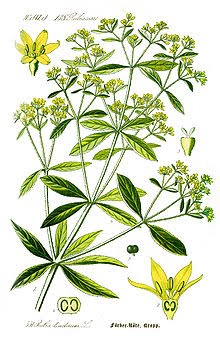
The original ‘lakes’ were said to have been invented by the ancient Egyptians. The madder plant was cultivated as a dyestuff in Asia and Egypt since about 1500 BC. Cloth dyed with madder root pigment was found in the tomb of Tutankhamen and in the ruins of Pompeii and Old Corinth. These’lakes’were made from plant and tree bark and the powder thus obtained fixed on an inert transparent base such as Barium White, gypsum, chalk and so on,to hold and deepen the colour. A stronger and truer shade, called Crimson Madder, was made from the insect kermes vermilio or Kerria laca (now sadly an endangered species) while Carmine, another deep red colour, was made from the cochineal beetle and used as food colouring for many years. Alizarin Crimson is another red used mainly as a dye and for years coloured the uniforms of the British army, leading to the nickname of 'the redcoats’, and is still used by the Canadian Mounted Police for their uniforms.
In 1806 the lovely shade of Rose Madder Genuine was formulated by the renowned chemist, George Field who mixed it with alum and an alkali into a Madder Lake which achieved a far more stable and permanent effect than the previous old colours. This would have been the colour used by The Pre-Raphaelite painters who obtained their colours and painting equipment from the colourman, Roberson, at that time. The recipes for colours made by Field are now exclusive to the Winsor and Newton range of colours. Apparently on visiting the Winsor and Newton stand at the Crystal Palace exhibition, Dickens said with delight, ‘ has anyone seen anything like Winsor and Newton’s cups of Carnations and Crimsons loud and fierce as a war cry and Pinks tender and loving as young girl?’ This exclamation of Dickens sums up the associations we have with these colours, the sense of blood, war, vitality on the one hand and the softer,more tender feminine meanings when diluted with white and rendered less fierce and violent.
The old crimson colour taken from the roots of the madder plant was made of alazarin and purpurin, the latter being especially unstable and liable to fade with time, espcially if kept in the light. The great painters of the past had their own special recipes for dealing with this problem, crimson being a special favourite then as now not only for effect but also symbolically. According to Culpepper’s Herbal, the plant was ruled by Mars, the God of War and red has always been associated with violence, blood, agressive energy, anger, warlike instincts and sexuality. Yet, because of the costliness of making the colours red and purple, it was used by Kings and Queens and later by the Church, thus symbolic of both temporal and spiritual power. Reds were much employed by the Pre-Raphaelite artists too, again with symbolic intent, but also to add richness and sensuality to their pictures. Thus Henry’s comment that it was used greatly by the old masters and appeared to darken and intensify with time due to the secret mixing techniques of the old masters..
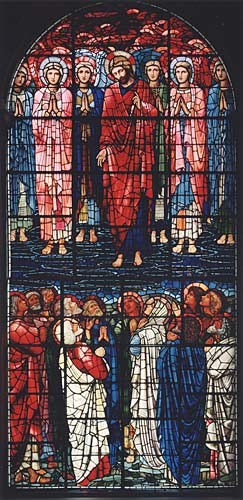
This means of preserving their paints were kept secret and only passed on by the masters to their prominent and trusted pupils. William Blake was a great fan of Rose Madder. Murillo and Michaelangelo also used it widely. These great men would have intended a deeper, spiritual significance of the colour and were interested in the idea of alchemy and all its symbolism. Thus the use of Rose could also be connected with the idea of heart-felt,romantic, courtly love in a spiritual rather than carnal, sensual sense. The Rose was an allegory of Venus and later of Mary, the mother of Christ, who in older paintings is almost always seen in red robes with a cloak of deep blue, the traditional blue of the starry sky. Many churches have a Rose Window and the precious and costly red colour was widely and richly used in stained glass, particulary by Burne Jones whose magnificent red, flaming windows decorate the church of St.Philip's Cathedral in Birmingham.

Rose is also the beloved in a more earthly sense, the 'fedeli d’amore'. The five petals of the rose were considered symbolic with the five senses. And, of course, corresponded to that inner place, the heart - both the organ that pumps our blood around and also the true 'heart' where all our feelings and emotions from many lifetimes are said to be stored.
‘It seems as though the rose-coloured blood of the alchemical redeemer was another symbolic idea which derived from a rose mysticism that penetrated into alchemy and that, in the form of the ‘red tincture’ expressed the healing or whole making effects of a certain kind of Eros.’ From ‘Alchemical Studies ch. 5 The Philosphical Tree’: Carl Jung
Eros in this sense is a conscious, inward-looking erotic love. ‘Loving oneself’ it may be called. Not the egotistical love of a false and vain self-love, but the true sense of acceptance and love of all that one is, imperfections and all. A love that gives meaning to the commandment, ‘Thou shalt love thy neighbour as oneself’. How few of us truly love ourself or know how to heal ourselves?
It is this redeeming process that I attempt to portray in ‘The Crimson Bed’ as the protagonists face their inner darkness, come to terms with it and through the process of pain and suffering (which has to become conscious, acknowledged, confessed and understood) eventually emerge once more into the light and are healed. The ancient concept of the coniunctio, the mystical marriage, is important here, the uniting the Masculine and Feminine. Although in alchemical terms this is an inner process, in the sacrament of marriage we undertake both the inner and outer union so that a man and woman may become as 'one';a fact lost in these modern times of turbulent relationships where the true meaning of marriage has been forgotten and despised. To my mind, all romantic stories, however badly written, sentimental or foolish they may seem to some, have the 'coniunctio'as the end in view. They could all be called alchemical studies!
Pictures: John Waterhouse 'The Crystal Ball'(detail): Rosetti 'A Vision of Fiametta':
Murillo 'The Virgin of the Rosary': Rubia Tinctorum (Madder root plant) Burne Jones stained glass window 'The Ascension'
Sunday, July 25, 2010
Dutch Island Madness and Swedish Terror

Dutch Island Madness: The two books I have read recently have both been marrow chillers of the first order though set in completely different times and different locations. But the theme of both is a sadistic, power crazy person who commits horrifying acts of cruelty.
Greta Van der Rol's new book Die a Dry Death is one of those amazing stories that horrifies and at the same time forces you to read on and on. The story,set in 1629, arose from the real event of a Dutch ship, The Batavia, that ran aground on a reef, part of a group of tiny, uninhabitable islands off the western coast of Australia. When the ship foundered, the captain Adrian Jacobz, set sail in a small boat with a few of his sailors to get help. The remaining survivors, who included several women and children, were left on the islands while a substantial treasure and goods owned by the Dutch East Indies trading Co.remained on the foundered ship out on the reefs. From those who remained, a figure emerged who had hitherto been in the background, a clerical, quiet person who now took charge of the survivors. This soft-spoken, charming, cultured man now turned into a tyrant infinitely more cruel and dangerous than the sea and the reefs from which these hapless people thought they had escaped. Greta's imaginative portrayal of Cornelisz is brilliant. She shows how the desire to survive turns him into a monster and yet allows him moments of strange tenderness when in love. You feel almost sorry for him when his end is nigh. He has to my mind become The Dark Lover, the monster, who haunts so many women's books from Bronte to Mary Shelley.
DaDD is indeed a compelling tale and Greta has been fascinated by the story for twenty five years. Her writing skills are impeccable. One is drawn immediately into the scenario and carried on by the sheer power of her depiction, the characters she builds and the settings she creates. But it is an unrelentingly dark tale, so be warned, though a clever twist at the end helps to lift the story again and cheer the departing reader.

Swedish Terror: The second story I read after Die a Dry Death was The Girl with the Dragon Tattoo by Stieg Larsson. A cold, Scandinavian atmosphere pervades this peculiar story set in Sweden (quite a contrast to my previous read set in the heat and dryness of the Australian islands.) TGwDT is a compelling, bang-up-to-date tale with real, flawed and interesting characters that one cares about. Lizbet Salander is a very modern heroine, brooding, surly, uncommunicative, angry and yet oddly tender and touching. Yet, despite her modernity, the tattoos, the rings in nose and lip, the punk hairstyles and clothes, she plays an ancient role and comes over as one of the vengeful Furies of Greek myth. She it is who really kicks ass, who turns the table deftly and brilliantly on those who offend her. She is, like any ancient goddess, in love with and protective of her hero.
But parts of the story bothered me, not because I'm sqeamish or insensate to the darkness of human nature, but bothered by the author's need to describe every horror in full, sickening detail. It left a sense like heavy meat, difficult to digest, lingering in one's mental stomach and at times quite sickening. Rape, incest, murder, animal cruelty and just about every other bestiality known to man is portrayed. Where does one go from there? These things obviously appeal as the books are now best sellers. Stieg Larsson is said to be making a point about the attitude of men to women (The original title in Swedish was Men Who Hate Women)the books are said to be a social indictment of our times. As if men's cruelty to women and the female desire for revenge was in any way new! It begs the question what sort of mind does the writer have that he or she can want to describe such horrors in detail? At the same time what sort of psyche do we all have that we wish to dive into such dark depths?
There comes a point when one must be satiated, deadened by it and will the tide then turn towards brighter, lighter, more uplifting works of fiction?
You need a strong stomach for both of these stories. But I feel they are worth reading for their power and brilliant characterisations.
Wednesday, July 07, 2010
Time Travelling

The film Time Traveller's Wife was a suprisingly good one. It managed to encapsulate a truly original, clever and suprisingly romantic story very well. However, I have to confess that in this instance the film was far more enjoyable than the book.
Not that the writing of the novel isn't superb. Audrey Niffennegger has some truly beautiful scenes and phrases and the dialogue and characters are very real. Chapters can end beautifully like this...
'She wrote me a poem', Clare says again in wonder. Tears are streaking down her cheeks. I put my arms around her and she's back, my wife, Clare, safe and sound, on the shore at last after the shipwreck, weeping like a little girl whose mother is waving to her from the deck of the foundering boat.'
It's just that it is far too long drawn out and over detailed. Every person is described in full, every little scene played out and most of the happenings are simply commonplace and unexciting explorations of family life. I appreciate that the attempted normality of the lives of the two main characters, Clare and Henry, contrasts with Henry DeTamble's strange affliction that causes him to travel back and forth in time, split into two people so that he is able to visit himself as a young boy, and other extraordinary happenings. In some respects it expresses how little we know and understand about people who we imagine we know intimately well. This is all brilliantly handled and at first one is enthralled and captured by the plot. But I'm half way through the book and now really tired of Henry's excursions back and forth, beginning to skip through chunks of words, wondering where it's all going, if it's going to get anywhere at all and if I care anymore.
Audrey, darling, we've got the idea of what happens when Henry suddenly leaves one dimension...and his clothes... behind him. You don't have to have scene after scene after scene...
How come editors shriek at one for two words of over-description and nobody made this writer delete some of her scenes and chapters to make this a far more readable story? Don't get me wrong. I love long stories. As a child I read War and Peace in two days. Try Edward Rutherford's amazing works like London, Russia, Sarum and so on. They are riveting from start to finish and truly satisfying. TTW is like having a delicious and enjoyable cake which is then served up at every meal till one is sick to death of the taste of it.
It strives to be spiritual and poignant and indeed, many scenes are just that; much sense is spoken, many deep questions and avenues explored and I know I shan't forget the essence of this story.
In the end, we all look for different things in a book. My daughter found The Time Traveller's Wife 'entrancing'. So that's a fair enough comment.
Sunday, June 27, 2010
Beginnings and Endings; which are best?

I have just read a stunning book called Cathedral Street by L J Hippler. Larry is a writer of the first magnitude and like all good books, it took me a while to get into it. This was partly due to the fact that the story is set in Baltimore, USA and being a Brit,I need a little while to adjust to the different speech patterns, attitudes and thoughts of the main characters. However, the triumph of a good author is that one warms to the flawed,imperfect but very real people he creates and L J Hippler is a master of such characterisation. By the time I reached the last page with its poignant and tender ending I was immersed in and felt a part of the unhappy family whose father had bullied and browbeaten them all mercilessly. He was a truly horrible character and it was fascinating to see how his sons all went their separate and very different ways in order to try and escape the crippling influence of their past and where their efforts at escaping led them. The past, alas, can never be escaped however hard we try. It leaves its mark for good or ill.
I never give up a book until I'm at least half way through because I have so often found that a difficult start can often be a prelude to something that evolves and eventually grips one. A good ending is better in my opinion than a good start because it is the ending we are left with ultimately and that seems to round off a story whereas the start is forgotten. There are plenty of famous opening lines, it's true but they are few enough.
Too many writers nowadays feel they have to begin a story with something nasty and violent like Dan Brown's entries into most of his books; entries into a vicious, violent world that sweeps one relentlessly along, mesmerised and horrified by the author's imagination. But at least Dan Brown keeps one involved to the end. Whereas so many writers start with a marvellous few chapters that promise a lot (in order to catch an agent's eye) and then peter off into a dull, convuluted and often improbable story not worth printing in Woman's Own.
I always say that a book should be like good sex...a long, slow, exploring start that warms up to a glorious climax.
Well, try Cathedral Street, it does just that.
Thursday, June 10, 2010
Entertaining Thoughts

It's rather fun writing a blog that no one in the world reads but myself. I can write it as I want and not have to be massively funny, clever, modern, cranky, sexy or any other such thing. Today I want to muse upon getting older.
When I was young I considered myself serious, wise and wrote poems that meant something, that were full of deep,spiritual and lyrical thoughts. I loved to rhyme, to have a rhythm to the poetry so that it would sing like a bird. So much modern poetry tends to be disjointed and reads like prose chopped up into meaningless sections. That's not my style, no. Just like a good deal of of modern art and music, it appears pointless, sometimes contrived and even sham; an insult to rationality and good taste.
Now I'm older and I'm not so wise,serious or even sensible and this troubles me. What is more, I find I can't read heavy classical literature as I used to do because, having immersed myself this last few years in crime novels again (after thirty years of reading only non-fiction) now many classical novels seem slow, over-written and hard work. Lately I attempted Joseph Conrad's 'Heart of Darkness'. I loved this when young but couldn't rouse any interest or empathise with the characters and plot at all. Thank goodness I read most of these classics when a teenager.
Sadly, I confess I've become used to a faster pace and less description. Not that I'm an advocate of the 'no description and just dialogue' school. Description is the setting for the jewel of the characters and the plot. It creates and maintains the atmosphere - though too much un-neccesary description can be like wading through treacle. In my own stories I try to maintain some sort of balance between keeping the plot going and creating atmosphere. Not sure if I succeed or not - but I do battle against the modern yearning for what I call the 'Dan Brown pace' which hurtles along from chapter to chapter at breakneck speed, leaving one literally exhausted at the end. The sort of plot where the characters are simply made of cardboard, mere foils for the story.
The point is, I now can't read anything that taxes the 'leetle grey cells' anymore. My mother went the self-same road and when younger I was very critical of her change of taste from Nietzche to Barbara Taylor Bradford.
'I don't want to be educated anymore', she told me. 'I just want to be entertained.'
I understand what she meant now. It's as if one reaches a point in life when one has 'been there, done that, got the t-shirt'...as they say. One has experienced life pretty fully, desire is ebbing and there's no real wish to be told anything by anyone anymore. It's a different sort of wisdom, a leave-taking wisdom. One simply wants to be entertained. As long as it's good quality entertainment, of course. Hand me Patrica Highsmith's 'Strangers on a Train'. Now that's high class entertainment.
All in allthough, this trend toward a shallower form of reading is, I now realise symptomatic of the fact that it began to occur since I started using the computer in the 90's and since my daughter began to introduce me to modern writing in an attempt to make my writings more 'commerical'. Before that I would never touch a modern novel and yes, my style was, probably still is, 'old-fashioned'.
There is a brilliant article on the Telegraph about it brought to my attention by fellow-author M M Bennetts (May 1812). Here is a brief quote from that article.
And as for the claim that new media is turning us into shallow multi-taskers, here are some wise words from the 18th century and the fourth Earl of Chesterfield. "There is time enough for everything in the course of the day, if you do but one thing at once," he said, "but there is not time enough in the year, if you will do two things at a time. This steady and undissipated attention to one object, is a sure mark of a superior genius; as hurry, bustle, and agitation, are the never-failing symptoms of a weak and frivolous mind."
http://www.telegraph.co.uk/technology/7858189/Twitter-ye-not.html
Subscribe to:
Posts (Atom)