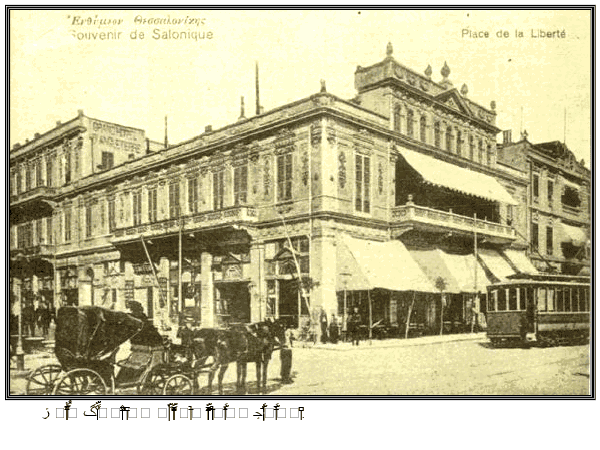
On this day, August 18th 1917, a Great Fire ( Μεγάλη
Πυρκαγιά της Θεσσαλονίκης )
broke out in Thessaloniki , a thriving
city and the second largest in Greece . It burned for 32 hours and spread throughout
the city right down to the seafront where it then set fire to the caiques and
boats in the sea. This at last brought
it to an end. This fierce fire had by
then destroyed businesses, homes and displaced 70,000 people. It was never again the same city.
Though it was such a rich and important city it was totally
chaotic in structure, dilapidated and unhygienic amongst the poor. Some
said the fire was due to a careless housewife upsetting boiling fat, but a
subsequent investigation indicated that the fire had begun in the Mevlane or
Turkish district in a house occupied by some refugees. A spark from a kitchen fire is said to have
ignited a pile of straw. No one will
ever really know. Such fires often broke
out both in Turkey and in Macedonia as
the houses were mainly built of wood in these districts. In this instance it was ignored partly from foolishness
and partly as there was no fire fighting equipment or water available. The famously fierce Vardar winds of Salonika were high that day and fanned the blaze sending
the flames raging through the city. The
water supplies had been commandeered by the Allied Forces to serve their camps
and hospitals, high up in the hills and city suburbs and they were not enthusiastic
about letting them be used for what they imagined was a small conflagration. Thus the fire swept through the rich business
districts and Jewish tradesmen were forced to flee, losing all their goods and
homes. Chaos ensued as people fled,
trying to save some of their goods, paying anything to the hamals (or porters) who profited nicely from the panic. Surprisingly,
due to the movement of the wind, most of the Turkish area, higher up by the
city walls remained largely untouched and can be seen to this day.
The French half-heartedly blew up some houses to try and
halt the run of the fire but didn't continue with the operation and eventually withdrew. In the end it was the British forces who
helped the unfortunate people as they streamed out of the city, taking them in
their military lorries to their depots for tea and biscuits and on to refugee
camps, hastily erected outside the city.
Some soldiers in the French forces were accused of looting abandoned
shops and even asking for tips to take people away. Such is the greed of humanity that will
profit from the misery of others.
There is an interesting eye witness account online by Dr
Isobel Emslie Hutton worth reading. I
myself read many letters from nurses, soldiers and doctors recounting their own
eye witness accounts when writing my book The
Long Shadow. It was one of the most
devastating fires of the First World War but it did pave the way for the city
to be reconstructed in a better manner.
The beautiful Aristotelous
Square was constructed during this time but sadly
the entire Hebrard plan was not totally implemented due to lack of funds. A typical Greek problem!

A good friend, Richard Devereux's grandfather, William, was
serving with the Salonika Campaign and no doubt was amongst the soldiers
helping the refugees. Richard has
written a splendid little book of poems about this period in his Grandad's life
called simply 'Bill'
The soldiers gazed in
awe at the glow and smoke . . .
were sent on trucks to
give what help they could.
'All hands to the
pumps!' But the fire brigade had none
that worked. Bill did what he could. He helped a bloke
load onto a cart his
few pathetic goods.
In the photograph,
Bill having a fag. Job done!
 |
| from YooniqImages: Inspecting damage after the fire |
For another take on the fire, read my book The Long Shadow, set in Salonika during this period, taken from first hand
accounts. In this extract Dorothy and
Captain Dunning have taken a shopping visit to town when they are caught up in the
melee of terrified people fleeing from burning homes.
'Those smelly
creatures in my car!' said Dunning in horror but his natural sense of justice
prevailed and he agreed to drive down the Via Egnatia and see if anyone needed
picking up. When we got near there we
began to see the first stream of refugees pouring along the street, clutching
their foolish belongings as if they were gold dust. One woman held a mirror and a brass bowl
against her chest and appeared oblivious to the wailing infant yelling and
clinging in terror to her skirts. An old
woman was wandering about , calling for her family, looking lost and bewildered. Others pushed and jostled along, dropping
their useless and heavy goods at last in order to lift their children who
screamed to be picked up and carried. To
my disgust I saw men load up their womenfolk with precious sewing machines and
other items , then leaving them to struggle along in the crowd, took themselves
off speedily to save their own lives.
The noise was
unbelievable. Men were shouting to each
other, women and children screaming and behind all this one could hear the
crackling roar of flames, the crash of timber and glass shattering and the
smell of acrid smoke which billowed up into the air and driven by a fierce wind
down the streets which formed tunnels for it.
It was like some strange dragon breathing out through its nostrils.